Carnegie Mellon University is leading a multi-university team that has secured an award of up to $39.3 million from the Advanced Research Projects Agency for Health (ARPA-H) to develop a wearable monitoring system to better identify fetal distress and its cause, enabling a safer labor and delivery experience for mothers and babies. The system, called OMEGA, or Optical, Mechanical, and Electrical Global Assessment of fetal hypoxia, aims to replace 50-year old, indirect, unreliable fetal heart rate monitoring technology with a unified, real-time assessment of fetal oxygen delivery and adaptive capacity. The project is under ARPA-H’s Making Obstetric Care Smart program, which is led by ARPA-H Program Manager Kate Arnold, M.D., MBA.
This press release features multimedia. View the full release here: https://www.businesswire.com/news/home/20260624524685/en/
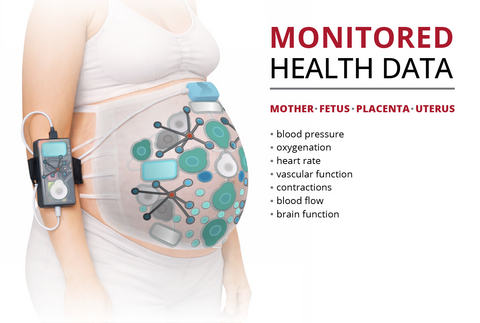
Carnegie Mellon University is leading a multi-university team that has secured an award of up to $39.3 million from the Advanced Research Projects Agency for Health (ARPA-H) to develop a wearable monitoring system to better identify fetal distress and its cause, enabling a safer labor and delivery experience for mothers and babies.
The standard of care for determining whether a baby is in distress during labor and delivery, contraction and fetal heart rate monitoring, remains largely unchanged from the 1970s. While changes in a baby’s heart rate can indicate potential problems, they fail to provide critical information like whether a fetus is receiving enough oxygen. In the United States, Cesarean deliveries account for roughly one-third of all births, and many are performed out of concern for possible fetal distress. Without direct information about oxygen levels, clinical decision-making during labor often relies on incomplete data.
“When a fetus is suspected to be hypoxic, care teams may have to act quickly without knowing the underlying cause,” said Jana Kainerstorfer, Professor of Biomedical Engineering at Carnegie Mellon and Principal Investigator of OMEGA. “The ability to directly measure a lack of oxygen to the fetus, and identify the cause, will have significant implications for obstetric care by enabling safer deliveries for all.”
To pinpoint why fetal hypoxia occurs during labor, OMEGA is looking at the whole system, not just the fetus in isolation. OMEGA will integrate several noninvasive sensors to measure contributing factors from the mother, the placenta and uterus, and the fetus. This systems-level, mechanism-based solution aligns with the complexity of maternal-–fetal physiology, enabling clinicians to understand not only whether a fetus is distressed but why.
Although the application is new, the work fits closely with Kainerstorfer’s broader research in biomedical optics, which focuses on noninvasive ways to measure oxygenation and blood flow deep within tissue. Her lab has previously developed optical approaches for monitoring brain physiology and fetal health.
“At the core, I’m interested in how oxygen, and the lack of it, affects the brain at all stages of life,” concluded Kainerstorfer. “From a technology standpoint, the question is always the same, how do you measure physiology deep inside tissue you can’t directly access? Standard fetal monitoring has not fundamentally changed in decades. If we can provide clinicians with better information about fetal oxygenation, that would be a meaningful step forward for maternal and fetal care.”
The OMEGA project team is co-led by Tiffany Ko, PhD, a research scientist with Children’s Hospital of Philadelphia (CHOP)’s Resuscitation Science Center. The team of nine partner institutions also includes UPMC Magee Womens Hospital, University of Pittsburgh, University of Notre Dame, Washington University, St. Louis, University of Pennsylvania, the Institute of Photonic Sciences in Barcelona, Spain, and Tyndall National Institute in Cork, Ireland.
“This project is a chance to close the gap between what clinicians need – reliable, real-time clarity – and what current monitoring can provide,” said Ko. “Our team is focused on methods that are rigorous, interpretable, and built for the realities of the delivery room. We believe this work can directly improve outcomes for mothers and babies, and CHOP’s commitment to children and families makes that mission deeply meaningful to us.”
The United States has the highest rate of maternal and infant morbidity and mortality of any wealthy country, despite spending more per capita on maternal care. The World Health Organization reports that C-section rates greater than 15% do not decrease mortality. If proven effective, OMEGA’s innovative approach could potentially reduce the C-section rate in the U.S., improve maternal and fetal health outcomes, and save millions of dollars in health care costs and hospital litigation.
“Pregnancy is a natural physiological process, and, also, medically speaking it represents a significant stressor to the mother and fetus,” said Hyagriv Simhan, MD, OB/GYN and Executive Vice Chair, Obstetrical Services at UPMC Magee-Womens Hospital and Professor of Ob/Gyn/RS [AH2] at the University of Pittsburgh. “Clinicians often have to make difficult decisions with incomplete and unreliable data during childbirth. Partnering with Carnegie Mellon University and other institutions around the world on project OMEGA is a promising step toward technology and AI insights that will revolutionize the labor and delivery room and make pregnancy safer for mothers and babies.”
About the College of Engineering: The College of Engineering at Carnegie Mellon University is a top-ranked engineering college that is known for our intentional focus on cross-disciplinary collaboration in research. The College is well-known for working on problems of both scientific and practical importance. Our “maker” culture is ingrained in all that we do, leading to novel approaches and transformative results. Our acclaimed faculty have a focus on innovation management and engineering to yield transformative results that will drive the intellectual and economic vitality of our community, nation, and world. The project is supported by the Engineering Research Accelerator.
View source version on businesswire.com: https://www.businesswire.com/news/home/20260624524685/en/
Media gallery