
Olathe, KS – September 16, 2026 – PRESSADVANTAGE –
Newman’s Auto Body & Repair has published new September consumer guidance explaining how modern vehicle materials can influence collision repair planning and why identifying what a damaged component is made from can be important before determining an appropriate repair procedure.
The new resource adds a materials-focused explanation to the company’s broader collision repair information. It concentrates on three areas: material identification, material-specific repair considerations, and manufacturer procedures associated with the affected component.
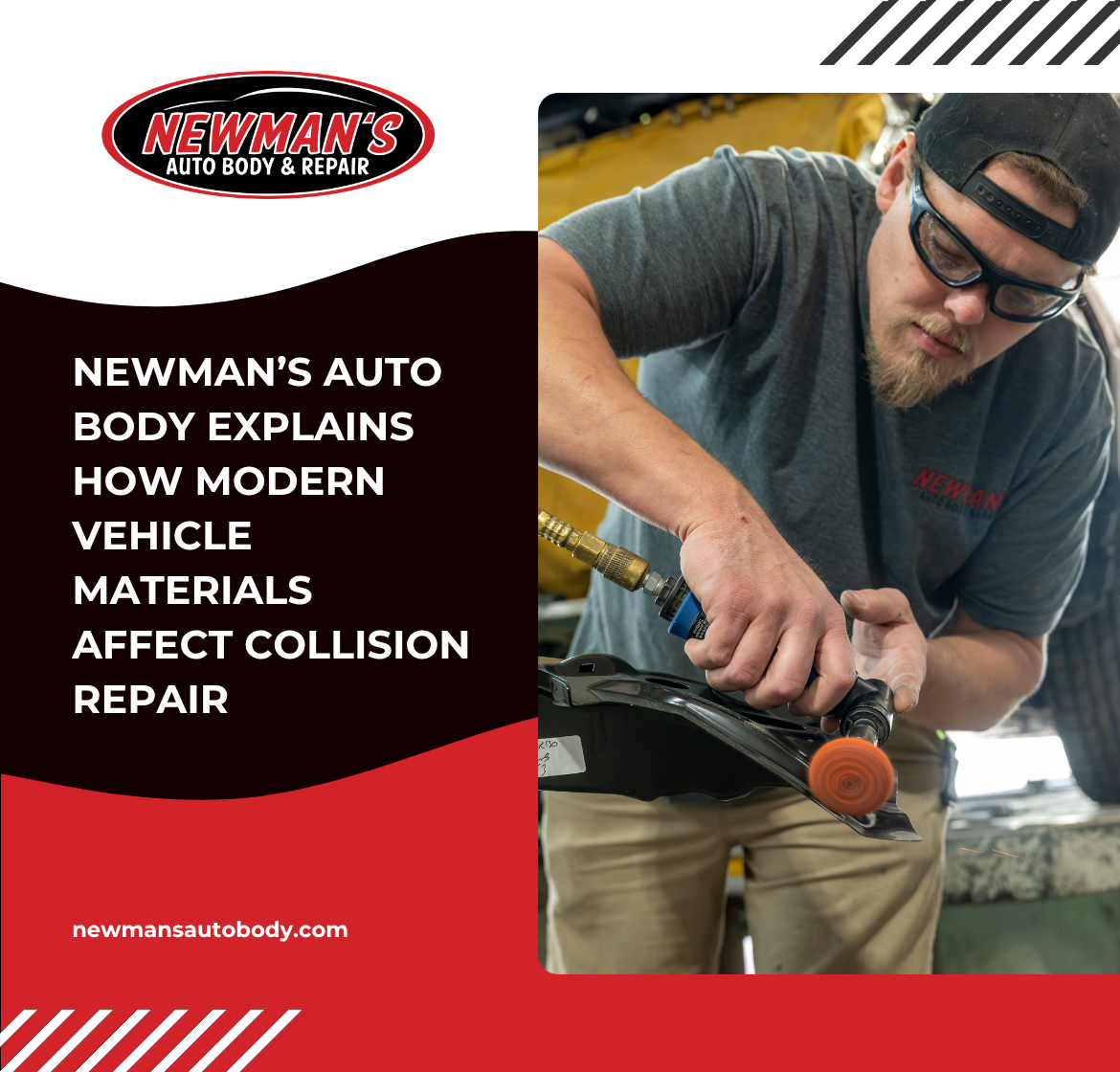
The guidance covers high-strength steels, aluminum, plastics, composites, adhesives, and mixed-material construction. Its purpose is to help consumers understand why two vehicles with similar-looking exterior damage can require different repair approaches.
Modern vehicles are not necessarily constructed from one type of metal or material. Depending on the make, model, model year, and component, manufacturers can use several materials throughout the body and exterior.
Identifying the affected component and its construction therefore provides an important starting point for repair planning. The visible size or appearance of a damaged area alone does not establish which repair technique is appropriate.
Consumers can find broader information about vehicle evaluation and repair planning through Newman’s Auto Body & Repair’s Collision Repair resource.
One area addressed in the September publication is the difference between conventional and higher-strength steels.
Steel remains common in vehicle construction, but different grades can have different properties and functions. Manufacturer information can identify repair limitations, replacement requirements, joining procedures, and other considerations associated with a particular steel component.
For consumers, this means describing a damaged component simply as “metal” may not provide enough information to determine how it should be addressed.
Aluminum introduces different considerations.
Depending on the vehicle, aluminum can be used in hoods, doors, fenders, liftgates, exterior panels, structural components, and other areas. Its characteristics can influence the repair techniques, tools, equipment, and processes applicable to the affected component.
The presence of aluminum does not automatically mean replacement is necessary. Repair-versus-replacement decisions still depend on factors such as component condition, damage location, accessibility, attachment areas, and applicable manufacturer information.
This becomes particularly relevant on mixed-material vehicles, where aluminum and different grades of steel may be used within the same body structure.
The September guidance also addresses plastics and composite materials.
Bumper covers and other exterior components can be manufactured from various plastic or composite materials. Collision damage can involve deformation, cracks, tears, damaged mounting locations, or other conditions.
Whether a particular component can be repaired depends on its construction, documented condition, damage characteristics, and applicable repair information.
The resource also makes an important distinction concerning bumper damage: visible damage to an exterior cover does not establish the condition of components positioned behind it. Those areas are evaluated according to the conditions documented on the individual vehicle.
Additional information about restoring damaged exterior components is available through Newman’s Auto Body Repair information.
Another focus of the September publication is how modern materials are joined together.
Vehicle components are not always attached exclusively with traditional welds or mechanical fasteners. Depending on the vehicle, manufacturers can use structural adhesives, rivets, welds, bolts, other fasteners, or combinations of joining methods.
When replacement of an attached component is being considered, manufacturer information can identify relevant attachment locations and joining procedures.
This is particularly important to understanding mixed-material construction. A replacement operation can involve not only the damaged component itself but also how that component connects with adjoining materials and structures.
These differences lead to the third major part of the September guidance: manufacturer repair procedures.
Manufacturer information can address material identification, repairability, replacement procedures, joining methods, attachment locations, measurements, corrosion protection, and other operations associated with particular components.
The September resource explains why this information is researched for the vehicle and component involved rather than applying a generalized repair method based on exterior appearance.
Newman’s Auto Body & Repair provides additional information about its manufacturer-specific programs through its OEM Certifications resource.
Material identification can also affect the tools and equipment associated with a repair.
Depending on the operation, collision repair can involve different welding equipment, joining tools, aluminum-specific equipment, measuring systems, or other resources. The fact that a vehicle contains advanced materials does not mean every repair requires every specialized tool. The equipment used is connected to the affected components and operations identified in the repair plan.
The September guidance also explains how material construction can influence repair-versus-replacement decisions.
A deformation in an accessible exterior panel can present different considerations from damage involving a higher-strength component, aluminum attachment area, plastic mounting point, or composite structure.
Neither repair nor replacement is universally preferable. The decision depends on the component, documented damage, accessibility, construction, and applicable technical information.
The resource further addresses corrosion protection as an example of a material-related procedure that may not be obvious from the finished exterior.
When collision damage or repair operations affect certain coatings, seams, surfaces, or attachment areas, applicable manufacturer information may identify corrosion-protection procedures associated with the repair.
Modern vehicle technology can also be located within or near components made from these materials. Cameras, radar units, parking sensors, wiring, antennas, and other equipment may be positioned around bumpers, mirrors, doors, windshields, or exterior body panels.
The September guidance separates these electronic considerations from material identification. The material used in a component does not, by itself, establish whether scanning, calibration, initialization, or another electronic procedure is necessary. Those requirements depend on the vehicle, affected systems, repairs performed, and applicable technical information.
For consumers, the new publication reduces a complex subject to three practical questions: What is the affected component made from? What repair considerations are associated with that material and damage? What manufacturer information applies to the component and operation?
Those questions provide context for understanding why visually similar collision damage can lead to different repair plans without requiring consumers to interpret technical manufacturer documentation themselves.
The central point of Newman’s Auto Body & Repair’s September guidance is that modern collision repair begins with understanding the construction of the affected vehicle and components rather than assuming that all metals, panels, or exterior materials can be repaired in the same way.
The publication is educational and does not establish a specific repair procedure for a vehicle without individual evaluation.
About Newman’s Auto Body & Repair
Newman’s Auto Body & Repair serves Olathe and surrounding Kansas communities with collision and auto body repair services. The company provides collision repair, auto body repair, paintless dent repair, hail damage repair, fleet repair, pre-purchase inspections, post-repair inspections, and manufacturer-certified repair capabilities.
###
For more information about Newman’s Auto Body & Repair – Fir St, contact the company here:
Newman’s Auto Body & Repair – Fir St
Zack Newman
(913) 768 1300
zack@newmansautobody.com
611 S Fir St, Olathe, KS 66061


