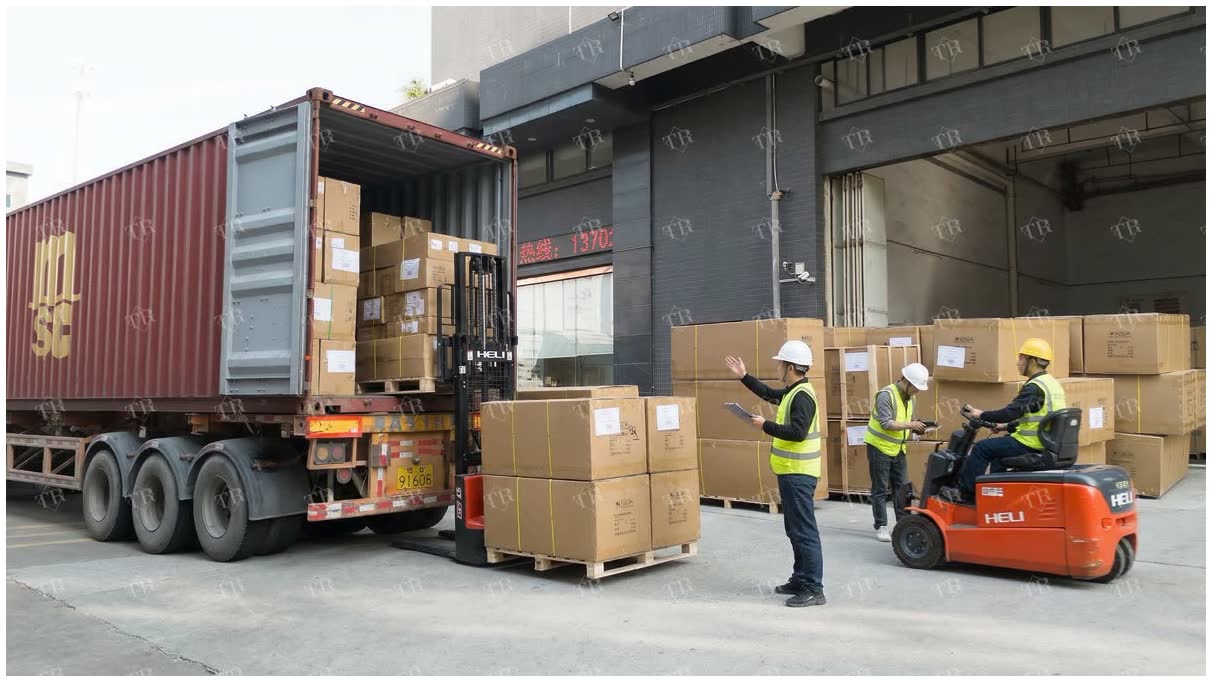
FOSHAN, GUANGDONG, CHINA, October 29, 2026 /EINPresswire.com/ — Navigating commercial wholesale salon furniture requires distributors to balance minimum order quantities, quotation structures, production lead times, private-label customization, and after-sales support into a cohesive purchasing strategy. Rather than evaluating unit prices in isolation, successful procurement directors align container volume with regional market demand and total landed costs. Operating a 30,000-square-meter facility in Foshan, TURRI provides flexible order quantities, mixed-category container shipments, and end-to-end technical support across a comprehensive salon furniture portfolio.
Build the Wholesale Order Structure Before Comparing Unit Price
Wholesale salon furniture procurement requires structuring order quantities, configuration depth, finish customization, and shipping logistics before comparing unit prices. Evaluating unit costs in isolation frequently introduces unexpected freight surcharges, incompatible packaging, or delayed assembly. Sourcing directors must unify technical specifications, destination compliance, and warranty terms to assess whether factory quotations provide equivalent commercial value.
Mixed-category wholesale procurement addresses channel inventory requirements far more effectively than single-SKU bulk purchasing. A commercial salon distributor rarely sells one hundred styling chairs without also supplying matching shampoo backwash units, mobile service carts, and client reception desks. TURRI supports mixed orders and flexible supply structures. This allows wholesale buyers to organize procurement around real salon project demands and seasonal inventory turn rates.
Procurement directors should structure their commercial RFQs into discrete evaluation stages. These encompass volume tiering, quote scope normalization, production scheduling dependencies, customization parameters, export packaging integrity, and post-delivery support commitments. Following this structured evaluation ensures that unit pricing remains grounded in total landed cost and operational reality.
How MOQ, Mixed Orders, and Pricing Shape a Distributor Order
Minimum order quantity (MOQ) functions as an operational framework balancing factory production cycles with distributor inventory velocity. Rather than imposing rigid single-model barriers, commercial manufacturers align order thresholds with specific manufacturing workflows. Sourcing directors evaluate four distinct volume tiers when planning mixed-category container shipments:
Evaluation Sample Order: 1 to 2 units per model, 7 to 12 days production, dedicated to showroom display and physical quality auditing.
Trial Mixed Container: 5 to 10 units per SKU across 4 to 6 categories, 25 to 30 days lead time, optimizing initial inventory capital.
Standard Full Container Load: 20 to 50 units per SKU, 20 to 25 days lead time, maximizing 40HQ container cube utilization up to 68 CBM.
Custom OEM Brand Program: 30 to 50 units per custom tool, 35 to 45 days lead time, including custom tooling and serialized brand packaging.
TURRI accommodates flexible order quantities and mixed container shipments within its structured distributor cooperation program. This framework provides tiered commercial pricing tailored to regional distributors, wholesalers, and project contractors. This commercial flexibility allows distributors to submit a tailored product assortment aligned with market demand. Wholesale pricing comparisons must normalize scope across every line item. Frame construction, foam density, upholstery grade, motor systems, finish treatments, brand labeling, export crating, and warranty coverage must be identical. Only then can a lower headline price represent a genuine commercial benefit.
Plan Lead Time Around Specifications, Quantity, and Customization
Production lead times cannot be treated as fixed catalog figures. They depend directly on the complexity of the approved product configuration. Manufacturing schedules are governed by raw material procurement cycles, hardware availability, specialized frame fabrication, upholstery processing, and electrical component testing. Standard catalog replenishment requires 20 to 25 calendar days. Mixed container orders with custom upholstery finishes require 25 to 35 calendar days. Complex OEM projects requiring dedicated molds require 35 to 45 calendar days.
Distributors should establish their target delivery dates alongside complete, sign-off-ready technical specifications. When orders involve custom upholstery colors, tailored metal finishes, or private-label embossing, lead times incorporate pre-production material batching and sample confirmation. Transparent schedule planning prevents standard catalog replenishment and complex customized orders from being scheduled under identical operational assumptions.
Turnkey commercial project orders involve interdependent milestones. Key phases include floor-plan analysis, model selection, custom engineering drawings, trial assembly, comprehensive quality testing, export crating, container loading, and ocean freight logistics. Visualizing these critical-path milestones during order placement ensures accurate channel fulfillment and on-time salon rollouts.
Define Customization, Packaging, and Sales-Material Requirements
Wholesale customization encompasses a broad spectrum of engineering and aesthetic adaptations. These include specialized vinyl textures, fire-retardant foam formulations, adjusted dimensional footprints, multi-motor configurations, branded embroidery, metal logo plaques, and coordinated aesthetic palettes. A professional procurement brief explicitly delineates which structural elements remain standard and which parameters are customized for the distributor’s brand program.
Protective packaging serves as an extension of the brand experience and an indispensable safeguard against shipping damage. Factory packaging specifications incorporate heavy-duty five-ply corrugated cartons, reinforced corner protection, molded foam blocks, moisture barriers, and standardized pallet bases. Furthermore, cartons can feature custom-printed shipping marks complete with regional barcodes and model identifiers. Wholesale cooperation also includes product marketing photography, detailed dimensioned schematics, color swatch books, full product catalogs, technical data sheets, installation guides, and client maintenance manuals. Treating these collateral materials as formal contract deliverables ensures that products arrive retail-ready and fully supported in local markets.
Compare Logistics, Spare Parts, and After-Sales Scope
Wholesale value realization extends well beyond final factory assembly. Export crating, container space optimization, freight forwarding coordination, comprehensive installation schematics, spare-parts provisioning, and responsive technical support dictate whether an imported furniture collection operates profitably in the field. Wholesale agreements include a dedicated two-year factory warranty covering chassis frames and motorized actuators. Manufacturers should supply a complimentary 1% to 2% spare parts package containing replacement switches and hydraulic seals in every container shipment.
TURRI unites full-category manufacturing infrastructure with an end-to-end commercial service framework. This includes export-grade packaging, professional container loading plans, international shipping support, localized installation guidance, spare-parts kits, and ongoing technical service. These capabilities provide wholesale partners with an accountable operational framework that protects distribution margins against costly field failures.
When evaluating supplier quotations, procurement teams should evaluate manufacturing scope and service commitments in tandem. A low-cost quotation that excludes export crating, container packing optimization, technical manuals, or routine replacement parts inevitably shifts substantial operational costs onto the distributor.
Salon Furniture Wholesale FAQs
These answers clarify the commercial and operational parameters distributors evaluate when negotiating order volumes, pricing structures, production lead times, and post-sale support.
How Should Distributors Structure an MOQ Discussion?
Distributors should present an integrated order profile detailing baseline catalog models, customized SKUs, anticipated reorder frequency, and container volume allocations. This enables the manufacturer to offer flexible MOQ terms across a diversified product mix.
What Makes Two Wholesale Prices Comparable?
Wholesale price parity requires normalizing frame materials, upholstery grades, foam specifications, motor manufacturers, custom finishes, brand labeling, packaging quality, international freight preparation, and warranty terms.
Which Inputs Should Be Ready Before Requesting a Production Schedule?
Procurement teams must finalize approved technical specifications, color and material selections, branding artwork, packaging marks, volume quantities, and target shipping windows to receive an accurate factory production schedule.
What Can Private-Label Packaging Include?
Private-label packaging can incorporate custom-printed master cartons, localized brand logos, regulatory and compliance marks, warehouse SKU barcodes, retail-ready interior packaging, and branded assembly instruction manuals.
Which After-Sales Fields Belong in a Wholesale Agreement?
A wholesale agreement should detail warranty duration, covered components, spare-parts allocation ratios, technical troubleshooting procedures, claim resolution timelines, and factory service contact protocols.
Prepare a Wholesale RFQ for TURRI
Structuring a comprehensive wholesale program unites minimum order flexibility, transparent quotation baselines, realistic lead times, and after-sales support into an efficient purchasing strategy. To establish a profitable wholesale distribution partnership, submit your product requirements, volume projections, and delivery destinations. Connect through https://turrisalon.com/ to initiate a collaborative manufacturing and pricing review.
TURRI
TURRI
Legal Disclaimer:
EIN Presswire provides this news content “as is” without warranty of any kind. We do not accept any responsibility or liability
for the accuracy, content, images, videos, licenses, completeness, legality, or reliability of the information contained in this
article. If you have any complaints or copyright issues related to this article, kindly contact the author above.

Media gallery